Highlights
-
Revolutionized Global Trade: How a simple steel box lowered shipping costs by over 90% and accelerated global commerce.
-
Intermodal Design: The technical architecture that allows cargo to move seamlessly across ships, trains, and trucks without manual repacking.
-
Historical Origins: Malcolm McLean’s 1956 innovation that transformed maritime logistics from labor-intensive break-bulk handling to full automation.
-
Economic Impact: The dramatic shift in manufacturing dynamics, enabling localized production to shift into globally distributed supply chains.
-
Modern Uses Beyond Freight: The emergence of modified structural designs for modular building, commercial storefronts, and off-grid housing.
-
Future Innovations: How IoT sensors, smart tracking, and sustainable manufacturing are driving the next generation of global container logistics.
What Is the Origin of the Modern Shipping Container?
The modern intermodal shipping container was invented in 1956 by American trucking entrepreneur Malcolm McLean. Before his invention, cargo was transported using a labor-intensive method known as break-bulk shipping, where workers manually packed individual boxes, barrels, and crates into the hold of a ship. This process routinely took several days or even weeks to complete at every port, driving up labor costs and creating massive bottlenecks. McLean recognized that transferring entire load units directly from trucks to ships would eliminate wasted time and substantially reduce port congestion.
On April 26, 1956, McLean’s converted World War II oil tanker, the Ideal X, carried 58 steel containers from Port Newark, New Jersey, to Houston, Texas. The maiden voyage demonstrated an astonishing reduction in loading costs, dropping from roughly $5.86 per ton using traditional methods to a mere $0.16 per ton with standardized containers.
To learn more about the early days of containerization, you can explore detailed historical archives on Wikipedia’s Malcom McLean Page. This drastic drop in logistics costs established the baseline for hyper-globalization, forever altering international trade routes and manufacturing strategies.
How Does Standardization Enable Intermodal Transportation?
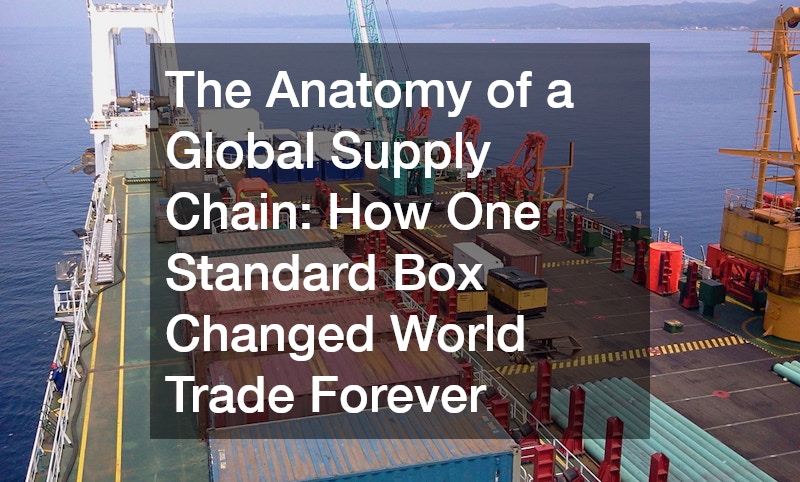
Intermodal transportation relies entirely on international standardization, which allows a single steel box to transfer between ocean liners, railcars, and semi-trucks without needing to be opened or repacked. During the late 1960s, the International Organization for Standardization (ISO) established uniform dimensions, corner fittings, and strength requirements for shipping containers. This universal sizing ensured that crane operators in Shanghai could secure and lift the exact same container design as port workers in Rotterdam or Los Angeles.
-
Standard Sizing: Containers are primarily produced in 20-foot and 40-foot lengths, measured in TEUs (Twenty-foot Equivalent Units).
-
Corner Castings: Precision-engineered twist-lock corner fittings allow automated cranes to lock onto, lift, and secure containers rapidly.
-
Structural Integrity: Constructed from heavy-duty Corten steel, these units can support up to 10 stacked containers, withstanding severe ocean conditions.
-
Intermodal Compatibility: Standardized lock mechanisms allow smooth transitions across chassis trailers, double-stack railcars, and container vessels.
Why Did Containerization Power Global Industrialization?
By drastically cutting transit times and reducing product damage, containerization allowed manufacturers to decouple production processes from local markets. Prior to standard container transport, companies placed factories near local ports or consumption centers to avoid exorbitant shipping costs. Once the cost of long-distance ocean freight plummeted, corporations could take advantage of labor efficiencies and specialized regional capabilities anywhere on the planet.
This systemic transformation enabled “just-in-time” manufacturing, where parts produced in distinct countries arrive precisely when needed on an assembly line. Products that were once considered luxury imports became affordable household commodities due to the reduced cost per unit during sea transit. The efficiency of the intermodal box turned ocean freight into an extension of the factory floor, fundamentally binding international economies together into a interconnected supply ecosystem.
How Have Steel Containers Evolved Beyond Cargo Transport?
While designed strictly for global freight, the structural durability and modular nature of modern corrugated steel boxes have created a massive secondary market. When retired from ocean fleets, these units are routinely repurposed into versatile structural solutions, ranging from off-grid cabins and retail shops to climate-controlled jobsite storage facilities.
-
On-Site Construction Storage: A weatherproof storage container provides a secure, tamper-proof space for protecting high-value tools and materials at build sites.
-
Modular Housing & Commercial Design: Architectural designers stack modified boxes to build cost-effective homes, pop-up cafes, and multi-story commercial spaces.
-
Emergency Relief Housing: High-strength steel structures can be rapidly deployed to disaster zones as emergency shelters or medical stations.
-
Secure Industrial Warehousing: Facilities utilize a durable outdoor storage container to expand inventory footprint without constructing permanent buildings.
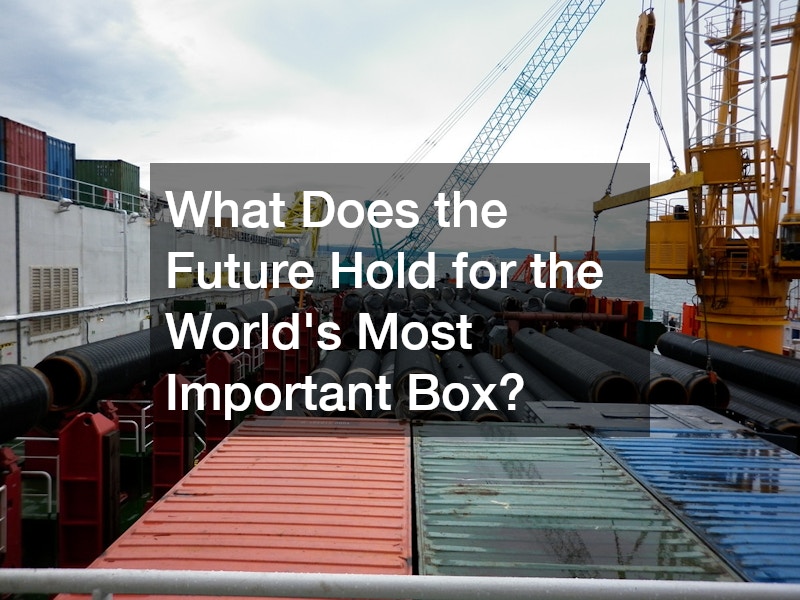
What Does the Future Hold for the World’s Most Important Box?
The next evolution of global shipping is centered on smart technology, sustainability, and digital tracking. Modern supply chains increasingly deploy IoT (Internet of Things) sensors within containers to monitor internal temperature, humidity levels, GPS location, and unauthorized opening events in real time. These smart features allow logistics managers to prevent cargo spoilage and rapidly respond to route disruptions before delays compound.
Simultaneously, the shipping industry is working to reduce its carbon footprint by adopting green steel manufacturing techniques and alternative fuels for cargo vessels. To inspect comprehensive ocean freight statistics and modern trade data, visit the World Shipping Council resource hub. Furthermore, deep insights into global economic impacts can be evaluated through the United Nations Conference on Trade and Development reports. As supply chains adapt to automated ports and carbon-neutral goals, the standardized box will remain the central pillar of international commerce.
The humble steel container is arguably the most transformative logistics invention of the modern era. By standardizing dimensions and streamlining transfer points, Malcolm McLean’s design eliminated expensive handling delays, lowered freight rates, and made globalized trade possible. From fueling complex global manufacturing supply chains to serving as modular housing and durable equipment storage, the versatility of these Corten steel boxes continues to impact nearly every aspect of the modern economy. As technology introduces real-time monitoring and sustainable materials to the industry, the world’s standard box will continue driving international trade for generations to come.