
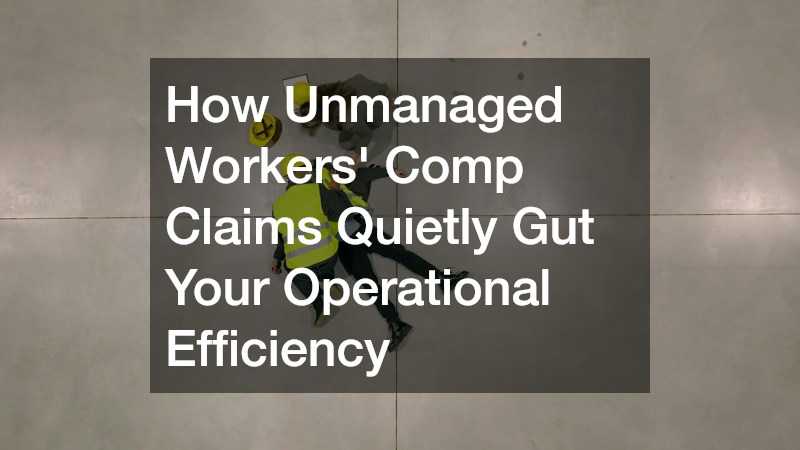
In the world of corporate finance and operations, executives monitor key performance metrics with hawk-like precision. Customer acquisition costs, supply chain lead times, labor utilization rates, and gross profit margins are scrutinized during quarterly reviews. Yet, buried within the line items of administrative overhead lies a silent, compounding drain on corporate productivity: unmanaged workers’ compensation claims.
Most business leaders view workers’ compensation as an unavoidable cost of doing business—a fixed insurance tax managed by human resources or an outsourced insurance broker. When an employee is injured on the job, management focuses primarily on the immediate direct expenses: medical bills, short-term disability payouts, and potential premium adjustments on future policy renewals.
This narrow focus misses the broader operational reality. Direct medical expenses represent only the visible tip of a massive financial iceberg. Beneath the surface lies a web of indirect costs—lost productivity, management distraction, administrative friction, team burnout, and legal friction—that quietly erodes profit margins and slows daily operations.
Treating workers’ compensation management as an administrative chore rather than a core operational discipline is a costly oversight. This comprehensive guide explores how unmanaged claims undermine daily productivity and provides a practical framework for transforming safety protocols, claim intake, and return-to-work programs into a powerful engine for company efficiency.
Calculating the Hidden Operational Drag of Workplace Accidents
When a skilled employee suffers a workplace injury, the operational disruption begins instantly. The immediate aftermath requires stopping work, providing first aid, securing the area, and filing incident reports. However, the long-term operational friction caused by an unmanaged claim extends far beyond the day of the incident.
According to occupational health and safety research, the indirect costs of a workplace injury routinely outweigh the direct medical expenses by a ratio of two to four to one. When a key worker is suddenly absent, department supervisors must scramble to maintain production schedules. This often leads to paying expensive overtime to existing staff, pulling workers off other projects, or hiring temporary workers who lack the specialized training needed to maintain peak quality standards.
The administrative burden on management is equally severe. Department managers spend hours documenting the incident, coordinating with insurance adjusters, conducting root-cause investigations, and arranging shift coverage. This administrative distraction pulls leadership away from strategic growth initiatives, quality control, and customer service management.
Modern operational tools can significantly cushion this administrative blow. Deploying automated scheduling software and smart platforms like ai calendars allows operations managers to automatically adjust shift rosters, reassign tasks based on skill profiles, and seamlessly schedule light-duty return-to-work shifts without spending hours on manual spreadsheets. Automating schedule adjustments preserves daily operational momentum and reduces human error during high-stress transition periods.
- Quantify the indirect cost ratio: Factor in indirect costs—such as manager investigation hours, temporary labor onboarding, and team overtime—when calculating the true financial impact of an injury.
- Mitigate shift disruption with digital tools: Utilize automated platforms like ai calendars to reassign work schedules instantly and manage modified-duty employees without administrative delay.
- Cross-train critical operational roles: Train employees across multiple machinery and administrative functions so production lines do not grind to a halt when an injury occurs.
Preventing Facility Hazards and Managing Physical Risk Factors
The most efficient way to manage a workers’ compensation claim is to prevent the injury from ever occurring. Physical facility neglect is a leading driver of costly slip, trip, and fall incidents that result in extended employee absenteeism. Maintaining a safe, well-managed physical environment directly protects operational continuity.
High-traffic commercial spaces—such as warehouse loading docks, retail entrances, and manufacturing floors—require continuous physical maintenance. Commercial doors that stick, fail to latch, or feature cracked glass create physical safety hazards for employees moving heavy inventory or equipment through building entryways.
Conducting routine physical audits of building access points allows facility managers to schedule prompt storefront doors repairs and replacements before faulty hardware causes an employee injury or compromises building security.
Flooring integrity is another major variable in workplace safety. Polished concrete, worn tile, or damaged epoxy in wet or high-traffic zones creates extreme slip hazards. Investing in slip-resistant commercial flooring materials and placing heavy-duty, moisture-absorbent mats at building entrances drastically reduces fall hazards during inclement weather.
Proper visual cues and waste management protocols further protect team members. Installing high-visibility safety signs and clear floor markings alerts employees to wet surfaces, steps, overhead machinery, and forklift lanes.
Additionally, establishing strict disposal protocols around industrial waste and recycling areas prevents loose cardboard, broken wooden pallets, and plastic wrapping from cluttering walkways and causing tripping hazards.
- Audit high-traffic entryways routinely: Inspect commercial doors, hinges, and automatic closers weekly, executing storefront doors repairs and replacements immediately when defects appear.
- Upgrade high-risk floor surfaces: Replace slick, worn floor surfaces with high-traction commercial flooring systems and rubberized anti-fatigue mats in work zones.
- Deploy clear visual warning systems: Position durable, high-visibility safety signs and floor decals near elevated platforms, wet zones, and machinery lanes.
Optimizing Early Medical Intervention and Dedicated Clinical Care

When an injury occurs despite preventative measures, the speed and quality of early medical intervention determine the trajectory of the entire claim. Unmanaged claims often suffer from “medical drift”—a scenario where an injured worker seeks care from an emergency room or general practitioner unfamiliar with occupational medicine, resulting in unnecessary off-work directives and prolonged disability timelines.
Partnering with specialized occupational health providers ensures injured workers receive prompt, targeted care designed to promote recovery while keeping the employee safely engaged in the workforce.
Establishing a relationship with a clinic specializing in dedicated workers comp care guarantees that medical professionals understand your industry’s physical job demands and focus on early, safe return-to-work protocols.
Implementing a 24/7 telephonic nurse triage system gives supervisors and injured workers immediate access to registered nurses who can evaluate injuries at the moment of impact. Nurse triage helps determine whether an injury requires emergency hospital care, an urgent care clinic visit, or simple first-aid self-care. Early professional guidance reduces unnecessary emergency room visits by up to 40%, lowering direct medical expenses while getting the worker appropriate care instantly.
A critical component of operational recovery is designing a structured light-duty or modified-duty program. Keeping an injured worker connected to the workplace through temporary, medically appropriate tasks—such as administrative work, inventory audits, or safety monitoring—prevents the physical and psychological decline associated with extended home isolation.
Proactive communication from management during recovery reassures the employee that they are valued, preventing feelings of abandonment that frequently drive workers toward litigation.
- Establish relationships with occupational specialists: Partner with clinics that specialize in workers comp care to ensure medical treatment plans focus on safe, functional recovery.
- Deploy 24/7 telephonic nurse triage: Give employees immediate phone access to medical nurses at the time of injury to avoid unnecessary, expensive emergency room visits.
- Design a pre-approved light-duty job catalog: Create a bank of temporary modified-duty tasks across departments so injured workers can return to light work without delay.
Navigating Legal Complications and Mitigating Litigation Friction
One of the most destructive aspects of an unmanaged workers’ compensation claim is the introduction of legal friction. When an injured employee feels ignored, suspects their claim is being unreasonably delayed, or fears financial ruin due to missed paychecks, they naturally seek legal representation. Once a claim enters formal litigation, administrative costs skyrocket, communication breaks down, and operational resolution becomes severely delayed.
Understanding the mechanics of workers’ compensation litigation allows business leaders to address root causes before attorneys become involved.
When an employee hires a workers compensation lawyer, the dynamic shifts from a collaborative recovery process to an adversarial legal dispute. Plaintiff-side workers compensation attorneys seek to maximize disability ratings and financial settlements, often advising workers to remain off the job until legal negotiations conclude.
To protect the business and ensure fair treatment, companies must work alongside their insurance carriers and legal defense teams. Engaging an experienced workers comp attorney early when complex or contested claims arise helps ensure statutory deadlines are met, evidence is preserved, and medical reviews are conducted properly.
It is also important to recognize how premises liability overlaps with workplace injuries. If an employee or visiting contractor suffers a severe injury due to third-party negligence or hazardous property conditions, they may engage a slip and fall attorney to file a personal injury lawsuit outside standard workers’ compensation channels.
Maintaining detailed, objective incident reports, video surveillance footage, and floor maintenance logs is essential for resolving disputes quickly and protecting the company from compounding legal liabilities.
- Address communication gaps early: Provide clear, written explanations of wage benefits and medical coverage immediately to prevent employees from seeking legal counsel out of fear.
- Document incidents objectively and thoroughly: Collect witness statements, photos of the scene, and equipment logs within hours of an incident to establish a clear factual record.
- Consult specialized legal counsel for complex claims: Work with a qualified workers comp attorney to navigate contested claims, pre-existing conditions, or fraudulent reports.
Streamlining Claim Administration and Reducing HR Overhead
Administrative inefficiency is a primary cause of inflated claim costs and delayed return-to-work timelines. When claim intake relies on paper forms, manual filing, and fragmented communication between HR, department supervisors, and insurance adjusters, critical details slip through the cracks.
Transitioning to a cloud-based, digitized incident management system streamlines claim administration. Digital reporting tools allow supervisors to capture incident details, photos, and witness statements on a tablet or mobile device directly from the shop floor.
Filing reports electronically accelerates the notification process, allowing insurance carriers to open files, approve medical treatments, and begin wage replacement processing within hours rather than days.
Establishing a clear internal hierarchy of responsibility eliminates confusion during a claim. HR teams should maintain a centralized tracking dashboard that monitors active claims, medical work status notes, temporary light-duty assignments, and total lost workdays.
Regular administrative audits prevent claims from sitting open indefinitely due to minor unpaid medical bills or unfiled paperwork.
Closing stagnant claims is vital for controlling your company’s Experience Modification Rate (EMR). Your EMR is the multiplier used by insurance underwriters to calculate your workers’ compensation premium based on your historical loss data.
A high EMR directly inflates annual insurance premiums, penalizing your bottom line for years. Conducting quarterly claim reviews with your insurance broker and carrier ensures that open reserves are adjusted downward as workers recover, keeping your EMR rating low and freeing up working capital.
- Digitize the claim intake workflow: Replace paper forms with mobile digital incident reporting software to eliminate data entry delays and lost files.
- Centralize claim tracking dashboards: Maintain a single HR dashboard that tracks open claims, medical restrictions, and return-to-work target dates in real time.
- Automate adjuster communication: Set up automated system alerts to prompt insurance adjusters for status updates on open claims every 14 days.
Building a Safety-First Culture to Protect Long-Term Profitability
While systems, tools, and medical networks are essential for managing active claims, sustainable operational efficiency relies on fostering a proactive safety culture. A company that prioritizes physical safety creates an environment where employees feel valued, operational discipline is high, and workplace accidents are rare.
Building a safety culture starts with leadership accountability. Safety should not be treated as a secondary topic discussed only during annual compliance seminars. Instead, integrate brief, 5-minute “safety toolbox talks” into daily shift huddles. Discussing specific physical hazards, correct ergonomics, and proper tool handling every morning keeps safety top-of-mind for every team member.
Incentivize proactive hazard identification rather than punishing reported incidents. When workers are encouraged to flag loose handrails, oil leaks, or cluttered aisles without fear of reprisal, facility managers can fix hazards before an injury occurs.
Conducting thorough root-cause analyses after every near-miss or injury shifts the organizational mindset from assigning personal blame to fixing broken operational systems.
Finally, align safety performance with executive KPIs. When plant managers and supervisors are evaluated and rewarded based on safety benchmarks alongside production yield, safety receives the attention it deserves. A safe workplace is naturally an efficient workplace—free from the operational stops, administrative delays, and financial drains caused by unmanaged injuries.
- Incorporate daily safety toolbox talks: Dedicate 5 minutes at the start of every shift to review specific job hazards, lifting mechanics, and safety procedures.
- Incentivize hazard reporting: Reward employees who identify and report physical safety risks, near-misses, or equipment defects before accidents occur.
- Conduct systemic root-cause investigations: Focus incident investigations on fixing flawed processes, broken machinery, or training gaps rather than placing personal blame.
Transforming Safety Into a Competitive Advantage
Unmanaged workers’ compensation claims are an invisible tax on corporate productivity. Every unaddressed injury creates a cascade of financial and operational friction—draining administrative hours, triggering overtime costs, lowering employee morale, and inviting legal disputes.
Taking control of workers’ compensation management requires a shift in perspective. By treating facility maintenance, digital claim intake, specialized clinical partnerships, and return-to-work protocols as vital operational investments, business leaders eliminate hidden productivity drains.
Investing time and capital into physical risk reduction, automated scheduling tools, and a proactive safety culture yields immediate, measurable returns. You protect your workforce, safeguard your profit margins, and build an efficient, resilient enterprise capable of outperforming the competition for years to come.